
Rare disease landscaping
A structured read of the disease biology and evidence base, the diagnosis, referral and treatment pathways, and the specialists, centres and patient organisations around them.
Understand the disease landscape and the decisions it informs.
Rare disease landscaping brings disease landscape analysis, stakeholder research and KOL mapping into one view of the disease across Germany, France, Italy, Spain, the UK, the Netherlands and the Nordics. We set out the care pathways, which centres diagnose and treat patients, which specialists and organisations are relevant to your question, and what is known about the therapies in use, and what all of it implies for your programme.
Tangible deliverables you can act on
Decide which evidence gaps to address first
Identify the uncertainties that matter to your medical strategy or product profile. Get a prioritised view of what is known, what remains contested and which questions need further research.
Identify the experts relevant to your next decision
Build a shortlist for expert interviews, advisory boards or evidence discussions. Understand why each specialist or centre is relevant to your question, not just how frequently they publish. MAPPIQ supports the search; our team reviews the selection.
Find where diagnosis and referral need closer attention
Understand where patients encounter delays and how pathways differ between markets. Use the findings to prioritise local research, medical education or discussions with treating centres, with evidence gaps clearly marked.
Choose what to address before launch
Identify the barriers that warrant attention in each priority market. Get recommendations on which assumptions to test, which stakeholders to involve and what your medical, access and commercial teams should investigate next.
How the engagement runs
Scope
We align on the indication, subtypes, markets in focus and the decisions the landscape needs to inform.
Investigate and test
We build the evidence base from primary literature, registries and trial data, then test it with relevant clinicians, researchers, centres and patient organisations.
Interpret
We set out findings, uncertainties and what they imply for medical strategy, evidence planning and market prioritisation, and agree with you whether and how the picture is kept current.
Scope
We align on the indication, subtypes, markets in focus and the decisions the landscape needs to inform.
Investigate and test
We build the evidence base from primary literature, registries and trial data, then test it with relevant clinicians, researchers, centres and patient organisations.
Interpret
We set out findings, uncertainties and what they imply for medical strategy, evidence planning and market prioritisation, and agree with you whether and how the picture is kept current.
What a landscaping engagement gives you.
Engagement timeline
Scope and timing are agreed around your research question, priority markets and stakeholder groups; a focused engagement typically runs 6–10 weeks · deliverable: the landscape report plus a working session with your team · updates twice per year, or sooner when important developments affect your programme, agreed as part of scope · starts from a 45-minute scoping call
- A structured view of the disease biology and evidence base, including where the evidence is thin, contested or missing.
- Diagnosis, referral and treatment pathways per priority market, with the points where patients are delayed or lost.
- A curated register of relevant specialists, centres and patient organisations, with the reason each is relevant to your question.
- Documented stakeholder perspectives, open questions and the implications for medical strategy and evidence planning.
Rare disease landscaping, answered
What is rare disease landscaping?
Rare disease landscaping, also called rare disease landscape analysis, is the mapping of the clinical, stakeholder and policy environment around a rare disease. It shows how the field actually behaves, so strategy is built on real conditions rather than assumptions.
How is it different from market research or a competitive landscape?
Market research measures attitudes and tracks competitors. Rare disease landscaping maps the whole system that decides adoption: standard of care, referral patterns, payers, policy, and the people who shape each. It explains why a product will be carried or blocked, not only what people currently think.
When should we commission it?
As early as possible. The most value comes before positioning and evidence plans are fixed, when the findings can still change your strategy. Bringing us in early is cheaper than correcting course after launch.
Which therapy areas do you cover?
We work across therapy areas, with particular depth in rare disease and specialty conditions, where the stakeholder system is complex and the standard of care is contested.
Which markets do you cover?
We focus on European markets, where healthcare systems are fragmented and decisions differ by country. We can extend the analysis to other regions on request.
How do you capture stakeholder perception?
Through direct, structured engagement with clinicians, payers, policy actors and patient voices in each market. We design the conversations to surface how they actually frame the disease and the alternatives, not what they think they should say. This perception layer is the differentiating signal we bring into the landscape.
What do we receive at the end?
A living map of the disease ecosystem, named stakeholders by role, a documented perception view per stakeholder group, and a written report with clear implications for your scientific, access and commercial strategy.
Do you offer disease landscaping consultancy as a standalone service?
Yes. Our disease landscaping consultancy runs as a standalone engagement or as the first step of a wider rare disease consulting programme. Most teams start with a rare disease landscape analysis and then add barrier and driver analysis or TPP validation on top of the same baseline.
What do rare disease landscaping services typically cost and how long do they take?
Scope and timing are agreed around your research question, priority markets and stakeholder groups. A focused engagement across two to three European markets typically runs six to ten weeks, and we confirm the fee before any work starts. Where you want the landscape kept current, we agree updates twice per year, or sooner when important developments affect your programme.
What is Mappiq?
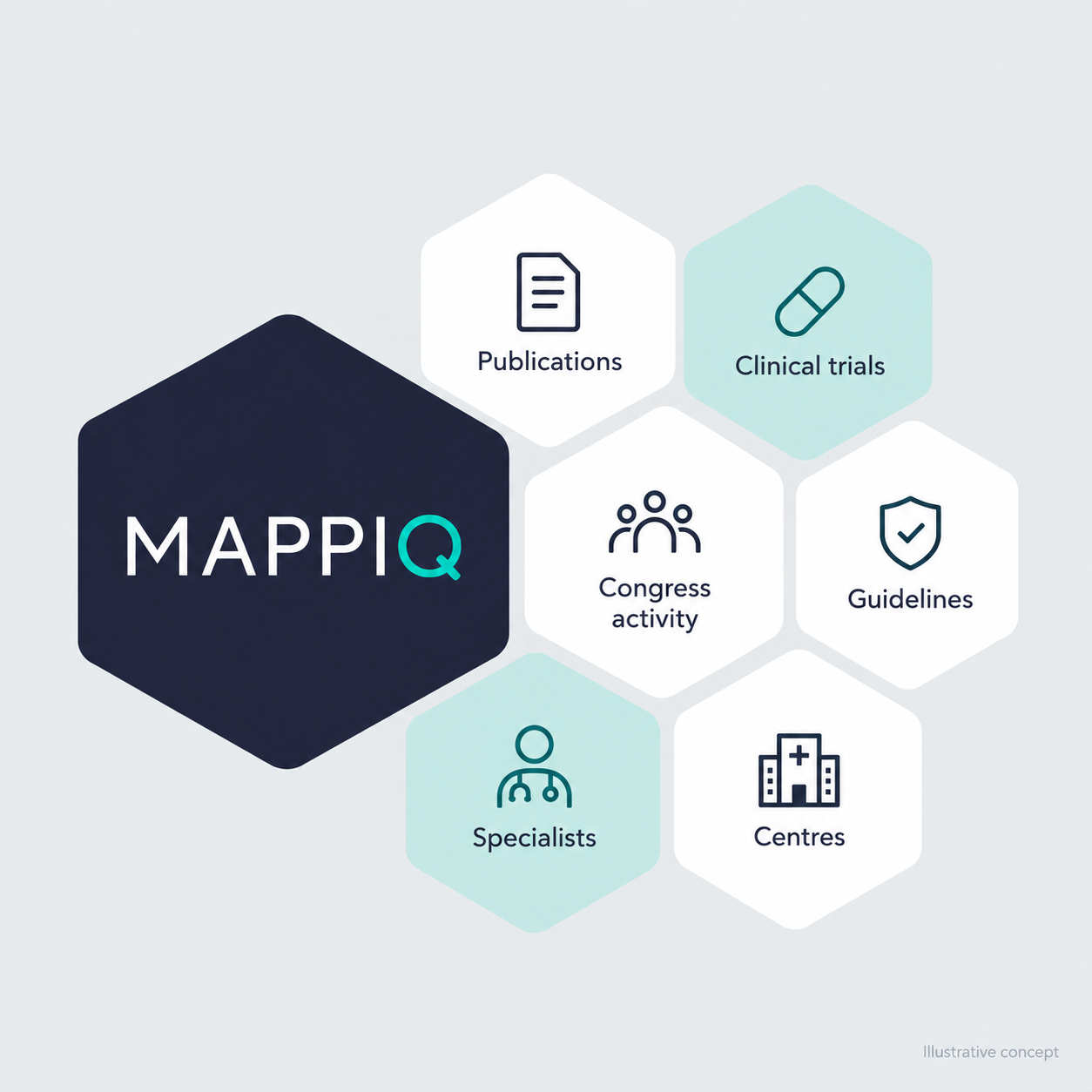
We developed Mappiq, our own KOL tracker that uses an AI-powered synthesis of literature, trial, conference, guideline, and digital data to show you who actually leads a rare disease field: the specialists who treat, research, refer and decide, mapped as one picture. Mappiq matches the KOLs with the relevance to your programme, so not a standard database of experts with no relevance to your programme.
Insights behind this work
- Why we focus on product-system fitProduct-market fit is necessary in healthcare, but it is not enough. Strong products can still fail to reach patients if the surrounding system is not ready to adopt and act on them. That missing piece is product-system fit.
- The Joint Clinical Assessment and rare diseaseOne EU-wide review of clinical value. Twenty-seven national decisions still to win. For rare and orphan products, the JCA is the hardest test yet — and 2028 is closer than it looks.
- How we measure ecosystem readinessReadiness sounds soft. We make it a number you can manage.
Discuss your research needs
Tell us the disease area, the priority markets and the decision in front of you, and we will set out what a scoped engagement would cover.